
Why You Can't Copy Zara: A Deep Dive Into Modern Retail Strategy
by Divya
3/13/20264 min read
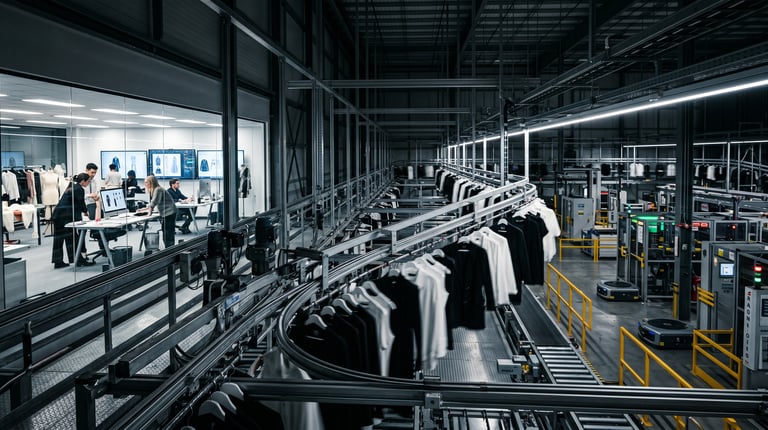

For decades, the fashion industry followed a strict, unyielding calendar. Designers drafted collections nearly a year in advance. Factories in distant countries manufactured clothes months ahead of schedule. Brands spent millions guessing what consumers would want next season.
Then came Zara.
While traditional retailers were stuck in a rigid 6-to-9 month production cycle, Zara flipped the script. The Spanish retail giant built a system capable of taking a dress from a designer’s sketch pad to a store shelf in Manhattan, Tokyo, or Paris in under three weeks.
This case study breaks down the operational blueprint, core strategic frameworks, and technology stack that turned Zara’s parent company, Inditex, into a global fashion powerhouse.
1. The Core Framework: The Agile & Responsive Supply Chain
Most traditional retailers outsource 100% of their production to low-cost manufacturing hubs to minimize labor costs. Zara rejects this rule. Instead, it prioritizes speed and agility over cheap labor.
The Traditional vs. Zara Production Loop
The Traditional Retail Loop: Predict trends → Outsource to Asia → Bulk shipping via ocean freight → Massive inventory warehouses → High seasonal markdowns when predictions fail.
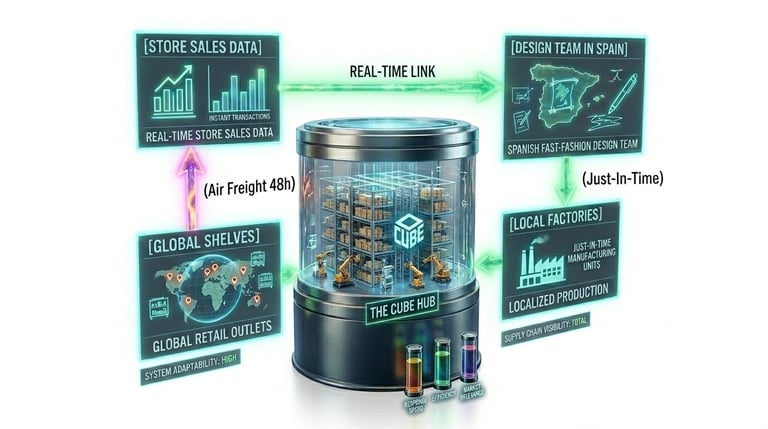
Zara’s Responsive Loop: Track real-time store sales → Localized, small-batch manufacturing → Bi-weekly air freight delivery → Immediate shelf placement → Minimal markdowns.
The Power of Local Proximity
Zara manufactures roughly half of its products in "proximity markets", mainly Spain, Portugal, Morocco, and Turkey. While labor costs are higher here than in Southeast Asia, the proximity allows Zara to react to shifting consumer tastes instantly. If a celebrity wears a specific style on social media on Monday, Zara can have a similar design in stores before the month ends.
2. Strategic Blueprint: The VRIO Breakdown
To understand why competitors struggle to replicate Zara's dominance, we can analyze the company using the VRIO Framework (Value, Rarity, Inimitability, Organization).
Value (V): Zara eliminates the biggest pain point in fashion: inventory obsolescence. By producing small batches, they rarely get stuck with millions of dollars in unsold, unwanted clothing.
Rarity (R): A fully integrated ownership model is incredibly rare in modern apparel. Zara owns its design studios, cutting facilities, and logistics hubs, giving them absolute control over the production timeline.
Inimitability (I): Copying Zara requires billions of dollars in localized infrastructure. Legacy brands cannot easily break long-term supplier contracts in Asia to build high-speed European factories.
Organization (O): Zara is perfectly organized to capture feedback. Store managers use specialized handheld devices to feed qualitative customer comments directly back to the design team in Arteixo, Spain, every single day.
3. The Secret Weapon: Artificial Scarcity & "The Cube"
Zara’s retail strategy relies heavily on consumer psychology, driven by a deliberate tactic known as artificial scarcity.
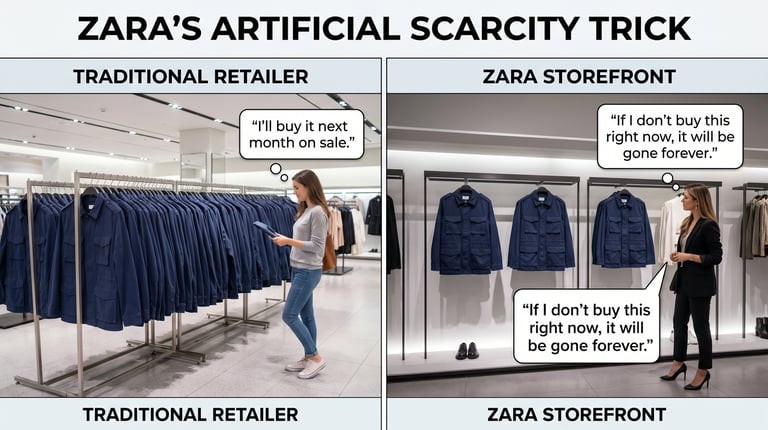
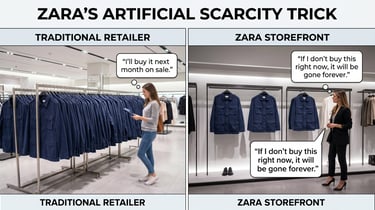
Because stock is intentionally kept low, items move incredibly fast. This creates a powerful "buy now or miss out" mindset. While traditional retailers sell roughly 60% of their clothes at full price, Zara sells closer to 85% at full retail value, keeping profit margins exceptionally healthy.
Logistics at "The Cube"
At the heart of this operation sits a massive, highly automated logistics hub in Spain nicknamed "The Cube."
An underground tunnel network connects local factories directly to the distribution center.
Automated sorting systems process and pack clothes into customized shipments for every individual store worldwide.
Every storefront receives fresh inventory exactly twice a week, ensuring the floor layout always feels new and exciting to returning shoppers.
4. Digital Transformation: The Tech Stack Behind the Clothes
Zara’s agility isn't just an operational triumph; it is a data-driven one. Two core technologies fuel their modern omnichannel ecosystem:
Micro-Chipped Inventory (RFID)
Zara embeds Radio Frequency Identification (RFID) chips directly into the security tags of every garment.
Instant Inventory: Employees can scan an entire clothing rack in seconds rather than counting pieces manually.
Location Tracking: If a customer cannot find a size S on the floor, the app or store device instantly shows if it’s in the back room, a fitting room, or a nearby sister store.
Tag Recycling: When an item is purchased, the expensive RFID tag is detached at checkout, sanitized, and sent back to the factories to be reused in the next batch.
Store as a Fulfillment Center
Zara treats its expensive flagship stores in major global cities as dual-purpose spaces: luxury showrooms for foot traffic, and mini-distribution warehouses for local e-commerce. This hybrid layout dramatically slashes shipping times and last-mile delivery costs for online orders.
Key Takeaways for Businesses
Speed Can Beat Margin: Paying more for local production can yield higher total profits by eliminating massive end-of-season clearance sales.
Listen to the Frontlines: Don't design in a vacuum. Let real-time data from store floors and consumer behavior dictate your manufacturing pipeline.
Scarcity Breeds Demand: Limiting supply can intentionally drive up consumer desire, brand loyalty, and full-price conversion rates.
Explore More Business Articles
Contact
Questions? Reach out anytime.
© 2025 BizSphere. All rights reserved.