
Oil Price Volatility: Implications for Inflation and Central Bank Policies
by Divya
3/12/20263 min read


In the latest update from the financial markets, Mike Dolan, Editor-at-Large for Finance and Markets at Reuters, provides crucial insights into the current state of crude oil prices and their significant implications for global markets. As crude oil once again tests the $100 per barrel mark, various factors are influencing market volatility, particularly geopolitical tensions in the Middle East.
Rising Oil Prices
Crude Oil Surges: Crude oil prices have recently surged, briefly exceeding the $100 per barrel threshold. This increase comes after a nearly 5% rise on Wednesday, driven by escalating attacks on ships in the Gulf region, overshadowing the impact of the International Energy Agency’s (IEA) announcement regarding a record release of crude reserves.
Market Volatility: The volatility in the oil market has reached levels not seen since 2020, indicating heightened uncertainty among traders. Iran's warnings that the ongoing conflict could push oil prices to $200 per barrel add to the tension, as the nation leverages its oil resources as a strategic defensive weapon.
Global Market Reactions
Stock Market Declines: The uptick in oil prices has led to declines across global stock markets. Major U.S. indexes finished flat to lower, while Asian markets have given up some recent gains. European and U.S. stock futures also opened lower, reflecting investor concerns over rising oil prices and their potential economic impact.
IEA's Record Release: The IEA's plan to release 400 million barrels from strategic reserves—more than twice the amount released after the Ukraine invasion in 2022—has not significantly eased market fears. Traders are now contemplating a timeline that could see continued disruptions in oil supply, leading to tighter markets.
Inflation and Central Bank Outlook
Inflation Concerns: With rising oil prices, financial markets are increasingly focused on potential inflation impacts and the corresponding reactions from central banks. The expectation of a second U.S. interest rate cut has diminished, with markets now pricing in barely one rate cut for 2026.
Upcoming Central Bank Decisions: The upcoming week will see a series of central bank decisions, with the Reserve Bank of Australia expected to raise interest rates. The European Central Bank is also anticipated to increase rates by July, as no central bank is likely to consider cuts in the current economic environment.
Treasury Yields and Currency Movements
U.S. Treasury Yields: U.S. Treasury yields have reached their highest levels in nearly six months, reflecting growing concerns about inflation and market confidence. Soft debt auctions have further complicated the situation, leading to a cautious outlook among investors.
Strengthening Dollar: The U.S. dollar has continued to strengthen, buoyed by dwindling expectations of rate cuts. This strengthening is weighing down gold prices, which are also affected by the broader economic landscape.
Chart of the Day
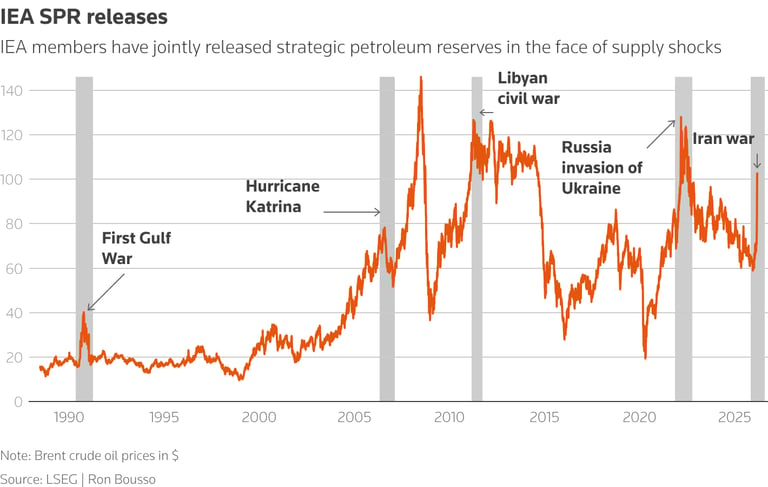
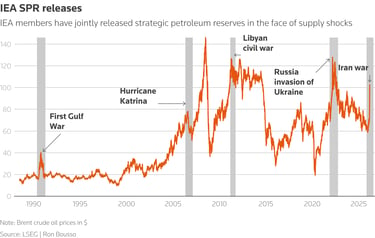
The infrequent coordination of emergency stock releases by the IEA underscores the gravity of the current oil supply situation, highlighting the challenges that lie ahead.
Today's Events to Watch
U.S. January trade balance (8:30 AM EDT)
U.S. January housing starts (8:30 AM EDT)
Weekly jobless claims (8:30 AM EDT)
U.S. 30-year note auction
Fed's Michelle Bowman speaks
International Energy Agency releases its March 2026 Oil Market Report
Opinion
In my opinion, the current dynamics within the oil market serve as a stark reminder of the intricate connections between geopolitical events and economic stability. The rapid rise in oil prices not only impacts consumer costs but also poses significant risks to global economic growth. As inflationary pressures mount, central banks face a challenging balancing act—navigating the need to support economic recovery while managing rising prices.
The market's reaction to the IEA's record release of reserves indicates a deeper concern about sustained supply disruptions rather than short-term fixes. Investors should remain vigilant, recognizing that the implications of these developments extend beyond just oil prices; they affect broader economic indicators, including inflation and interest rates.
As we move forward, it will be essential for policymakers to adopt a proactive approach to address these challenges, ensuring that the global economy can withstand the pressures of rising oil prices and geopolitical instability. Diversification and strategic risk management will be crucial for investors as they navigate this complex landscape.
This detailed news post captures the essence of the original article while providing additional insights and personal opinions to enhance the reader's understanding of the current market dynamics.
Explore More Business Articles
Contact
Questions? Reach out anytime.
© 2025 BizSphere. All rights reserved.