

The Apple SWOT Case Study
by Divya Kolmi
12/15/20254 min read
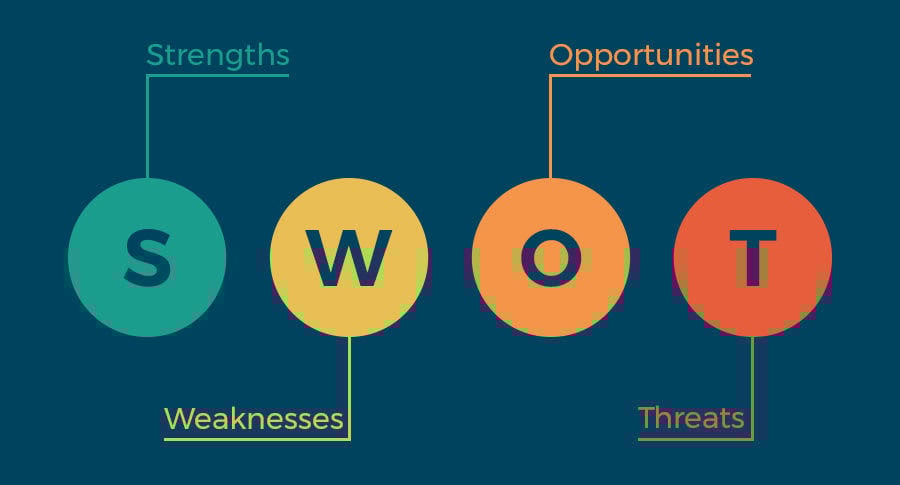
For any rigorous organizational study, whether in a corporate setting or as a required academic submission, situational analysis is mandatory. Specifically, the implementation of a comprehensive SWOT analysis is the most effective way to diagnose an organization's current strategic standing.
The SWOT analysis was created in the 1960s by Albert Humphrey during a landmark study conducted at the Stanford Research Institute. His goal was to determine the systemic reasons behind corporate planning failures. Since its introduction, this method has become indispensable for entrepreneurs and companies, as its primary function is to equip organizations with a comprehensive understanding of all internal and external variables affecting a business decision.
5 Essential Steps for Conducting a Comprehensive SWOT Analysis
To execute a high-quality SWOT analysis, whether for an academic assignment or a professional strategic plan, follow these five structured steps:
1. Define the Strategic Objective
Before starting the analysis, clearly establish the goal of the exercise. A SWOT analysis is not performed in a vacuum; it must be focused on a specific outcome, such as "entering a new market," "launching a new product," or "improving long-term profitability." Defining this objective clearly will guide your research and ensure the resulting analysis is relevant and actionable.
2. Conduct Thorough Research
Perform in-depth research on three key areas:
The Company: Review internal documents, financial reports, operational performance, and organizational structure.
The Industry: Understand sector trends, growth rates, key competitors, and technological advancements.
The Market: Analyze customer demographics, current demand, regulatory environment, and economic outlook. This comprehensive research provides the factual basis necessary to accurately identify the four SWOT elements.
3. Identify and List the Four Core Factors
Using the data gathered in Step 2, brainstorm and list specific points for each of the four categories. Ensure you maintain the correct distinction:
Strengths and Weaknesses are Internal factors (within the company's control).
Opportunities and Threats are External factors (market conditions beyond the company’s control).
4. Organize and Document the Analysis
Systematically arrange the identified factors. Create four distinct, well-defined sections—one for each element (S, W, O, T) and elaborate on each point. The goal here is clarity and structure. Once the individual sections are complete, you can summarize your findings into a matrix or draft a formal report detailing how the internal factors interact with the external environment.
5. Review, Refine, and Finalize the Report
The final stage is quality control. Thoroughly review the entire analysis to verify factual accuracy and ensure logical consistency between the listed factors. Edit the text for clarity, grammar, and professionalism. Proofreading the final document is crucial to submitting an error-free and credible strategic report.
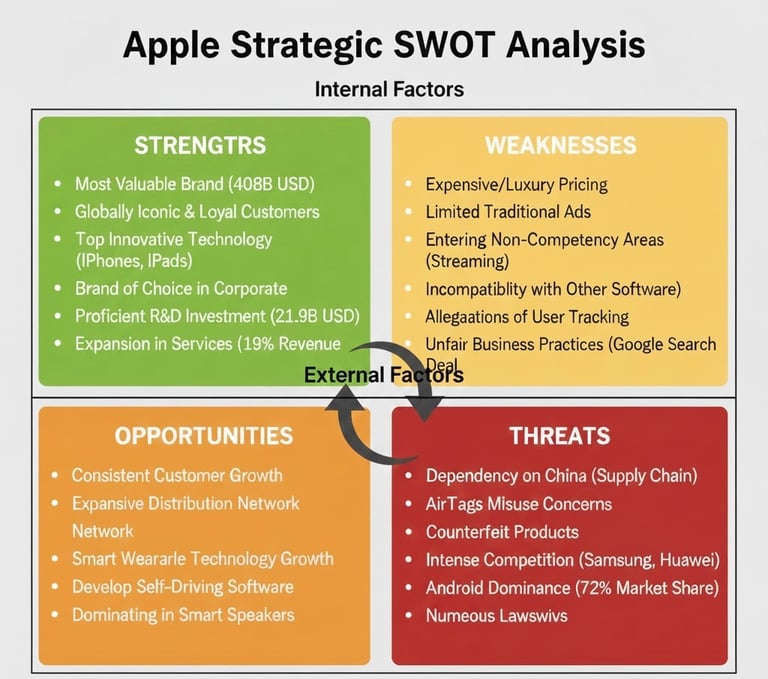
Let us analyze Apple’s position in the real business world.
Apple is one of the most successful companies globally, known for its robust technology products and exceptional software services. In 2021, iPhone sales alone represented 52% of Apple's overall revenue.
Strengths (Internal Assets)
Most Valuable Brand: Ranked #1 by Interbrand for nine consecutive years, brand value of $408 billion.
Globally Iconic: Millions of loyal customers; recognized for advanced, personalized technology.
Top Technology: History of introducing innovative products (iPods, iPhones, iPads).
Brand of Choice: Highly favored in corporate settings, especially among creative professionals.
Proficient Research & Development: Consistently invests heavily in R&D for a competitive edge (e.g., $21.9 billion in 2021).
Expansion in Services: Services are the second-largest revenue contributor (19% annually) including Apple TV, iCloud, and payment services.
Weaknesses (Internal Challenges)
Expensive Products: Considered luxury items, primarily targeting middle- and high-income consumers.
Limited Advertisement & Promotions: High reliance on iconic retail stores over major ad campaigns compared to rivals (Samsung, LG).
Entering Non-Competency Areas: Expanding into services (streaming, gaming, payments) against dominant players (Netflix, Disney).
Incompatibility with Other Software: Ecosystem sometimes limits support for non-Apple technologies or accessories.
Allegations of Tracking: Accused of using tracking apps, undermining consumer trust despite recent privacy controls.
Unfair Business Practices: Under investigation for payments to make Google the default search engine on Safari.
Opportunities (External Potential)
Consistent Customer Growth: High customer retention rate allows reliance on word-of-mouth and new alliances.
Expansive Distribution Network: Opportunity to grow its currently limited distribution network to boost revenue and sales.
Smart Wearable Technology: Continued growth opportunity beyond Apple Watch and AirPods into other wearable categories.
Develop Self-Driving Software: High demand for autonomous tech presents an opportunity to focus on software delivery.
Expanding into Chip Manufacturing: Plans to manufacture its own chips and semiconductors, competing with Intel and Broadcom.
Dominating in Smart Speakers: HomePod Mini success gives Apple a 10.2% market share (4 million units sold).
Threats (External Risks)
Coronavirus Outbreak: High dependency on China for manufacturing and supply chain significantly disrupts operations and revenue (20% of revenue from China).
AirTags Misuse: Designed to find lost items, but used maliciously for tracking and theft.
Counterfeits: Vulnerability to illegal utilization of its logo in third-world countries, damaging brand image.
Competition: Facing tough competition from major brands like Samsung, Huawei, and Xiaomi.
Android Dominance: Most major competitors use Android, which held 72% of the global market share in 2021 (Apple's 27%).
Lawsuits: Faces numerous class-action and competitor lawsuits (e.g., throttling CPU performance on iPhones).
Ultimately, the core utility of the SWOT methodology lies in its ability to synthesize internal and external factors. By clearly defining strengths, weaknesses, opportunities, and threats, this analytical tool guides the development of both short-term tactics and long-term strategic objectives. Its versatility even allows for application at an individual level for self-assessment and targeted personal growth.
Explore More Business Articles
Contact
Questions? Reach out anytime.
© 2025 BizSphere. All rights reserved.