
Pinterest’s Leadership Shakeup Signals a New Era of Strategic Marketing - But Does It Go Far Enough?
by Divya Kolmi
1/22/20264 min read
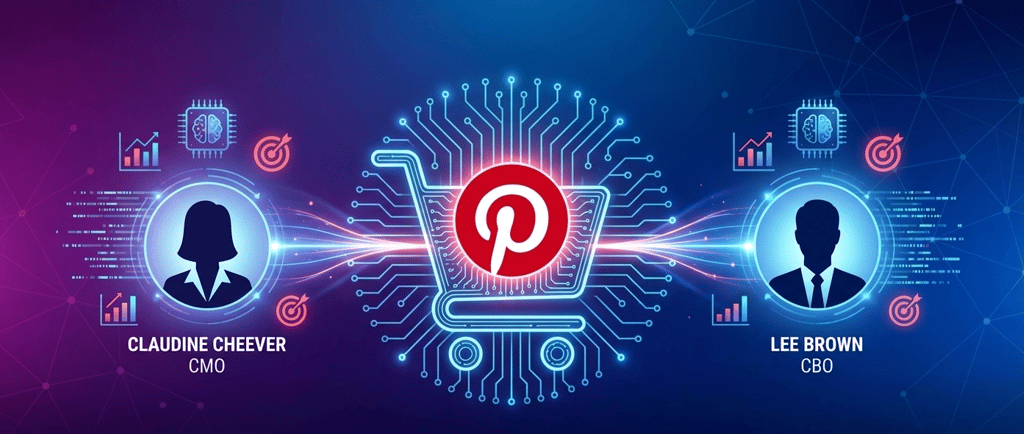

This week in tech and marketing, one of the most underrated yet strategically important developments comes not from a headline-grabbing IPO or a major product launch, but from the executive suite at Pinterest. The company announced two major leadership changes that, on the surface, look like a routine C-suite refresh, but in reality, they signal a deeper move toward commercial rigor, AI-driven advertising, and a rethinking of marketing’s role in growth.
Pinterest has appointed Claudine Cheever as its new Chief Marketing Officer and created a brand new executive role - Chief Business Officer (CBO), which has been filled by Lee Brown. Cheever joins Pinterest from Amazon, where she spent nearly a decade rising through global marketing leadership, while Brown brings experience from companies including DoorDash and Spotify, where he led revenue and advertising operations.
But What Kind of Strategy?
At first glance, these moves fit a familiar pattern: a tech company strengthens its leadership team amid growth pressures. But look deeper, and you’ll see that Pinterest isn’t merely shuffling seats, it is repositioning marketing from a supporting function to a strategic growth engine.
Historically, Pinterest’s marketing efforts under its previous CMO were more about brand identity and cultural resonance than revenue optimization. Pinterest’s former CMO, Andrea Mallard, helped shape the platform’s cultural voice and connection with users - particularly Gen Z, and steered its marketing through periods of user growth and brand expansion. However, she recently left to become Chief Marketing Officer at Microsoft AI, opening the door for a leader with a very different skill set.
Cheever’s background speaks volumes about Pinterest’s shifting priorities. At Amazon, she wasn’t just a brand marketer, she led high-stakes, performance-oriented global campaigns, including major Super Bowl activations and multi-market brand architectures that drove measurable outcomes in one of the most competitive e-commerce environments in the world.
This signals a strategic shift from brand awareness and culture toward measurable, revenue-aligned marketing, a direction that any serious MBA student should recognize as vital. Marketing today cannot be siloed; it must tie directly into growth metrics, customer acquisition economics, and monetization strategies. And Pinterest’s appointment of a Chief Business Officer alongside its new CMO reinforces that reality.
Why the CBO Role Matters (Even More Than the CMO)?
Creating a Chief Business Officer position and entrusting it to someone with Brown’s sales and ad-operations pedigree is more than an HR headline. It indicates that Pinterest now views its commercial engine as inseparable from its marketing strategy. The CBO role is designed to unify sales, advertising, content partnerships, and customer-facing operations under a single leader, effectively breaking down the old separation between “brand” and “business.”
This trend reflects broader changes in how modern companies view marketing. Gone are the days when marketing’s primary remit was storytelling and traffic. Today, marketing must own the demand funnel end-to-end from awareness and engagement to conversion and revenue recognition. A CMO without a clear line of sight to monetization is a luxury most public companies can no longer afford. And by elevating a CBO alongside the CMO, Pinterest is trying to build a single, integrated growth engine where brand and business outcomes reinforce each other.
The AI and Commerce Overlay
Make no mistake: this leadership shift is happening in the context of Pinterest’s ongoing transformation into an AI-driven commerce and performance advertising platform. The company has spent the past few years integrating AI into its shopping and ads infrastructure, positioning itself as a more intent-based alternative to traditional social platforms. Pinterest now boasts around 600 million monthly active users and is leaning into shoppable video and connected TV partnerships to expand its commerce footprint.
But being AI-powered is not simply about adding “AI features” to the product. It also means rethinking how marketing can leverage data, personalization, and predictive insights to drive real conversion lift, something that Cheever’s experience at Amazon ideally positions her to do. If Pinterest can successfully integrate AI into performance marketing strategies that measurably improve ROI for advertisers, it could attract budgets currently flowing to incumbents like Meta and Google.
But Here’s the Contrarian Take
For all the strategic sense behind these moves, there’s a risk that Pinterest may be trying to do too much too quickly. Building a unified commercial and marketing engine is easier said than done. Integrating AI in a way that genuinely improves ad performance without degrading user experience, aligning sales incentives with creative strategy, and maintaining brand relevance, these are hard problems. Most companies don’t solve them just by renaming titles or hiring two executives from outside.
Moreover, Pinterest still faces structural challenges: competition for ad dollars remains fierce, user growth has slowed compared to other platforms, and pressure from investors for monetization efficiency is increasing. The departure of its long-time Chief Revenue Officer amid this transition suggests internal shifts that aren’t just strategic, but urgent.
Pinterest’s leadership shakeup is more than a news item, it’s a signal of how marketing must evolve in 2026 and beyond. Marketing cannot be a side function that hands off leads to sales. It must be deeply embedded in commercial strategy, data analytics, and revenue accountability. Pinterest is making that bet, and its choice of leaders underscores the direction corporate marketing must take in a world where brand and business outcomes converge.
But strategic intent and execution are different things. Whether Pinterest can turn this leadership refresh into real growth and whether Cheever and Brown can align vision with performance in a crowded ad ecosystem, remains to be seen. Still, the very fact that Pinterest is making this bet is a lesson in strategic leadership that any business leader or MBA student should study closely.
Contact
Questions? Reach out anytime.
© 2025 BizSphere. All rights reserved.