
Exploring Patagonia’s Commitment to the Triple Bottom Line Framework: A Case Study
by Divya Kolmi
1/15/20263 min read
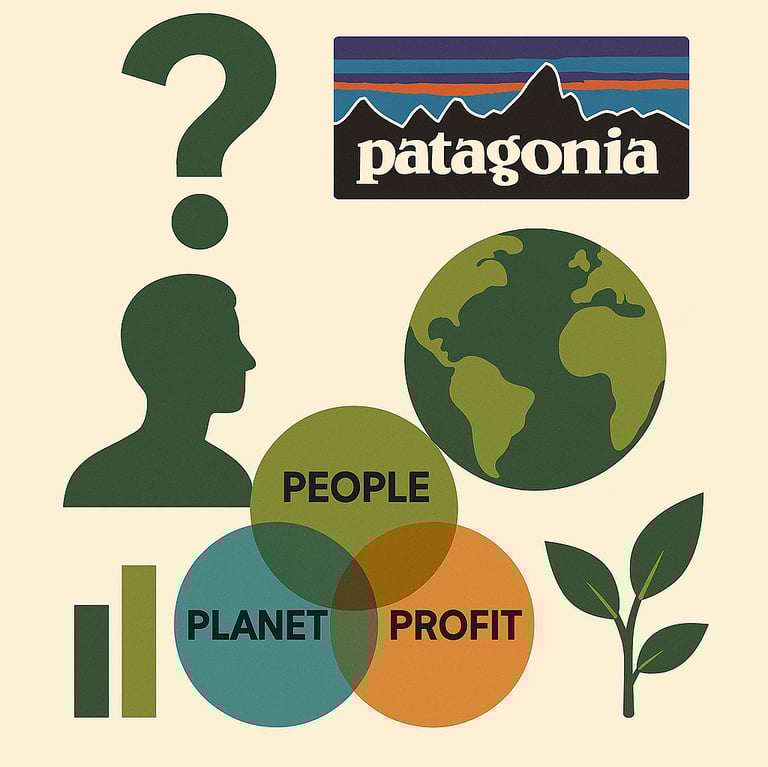
Patagonia, an outdoor apparel company founded in 1973, is widely recognized as a pioneer in sustainable business practices. Unlike traditional companies that prioritize profit above all else, Patagonia has embedded the Triple Bottom Line (People, Planet, Profit) into its core strategy. This case study examines how Patagonia operationalizes the Triple Bottom Line and demonstrates that long-term business success can coexist with social and environmental responsibility.
Company Overview
Industry: Outdoor apparel and equipment
Founded: 1973
Founder: Yvon Chouinard
Business Model: Premium outdoor clothing with a strong sustainability mission
Patagonia’s mission statement - “We’re in business to save our home planet”, reflects its commitment to redefining corporate success beyond financial performance.
People: Social Responsibility and Ethical Practices
The People pillar of the Triple Bottom Line focuses on stakeholders such as employees, suppliers, customers, and communities. Patagonia integrates social responsibility across its value chain.
Employee Well-Being
Patagonia offers competitive wages, generous benefits, on-site childcare, flexible work schedules, and strong work-life balance policies. These practices result in:
High employee retention
Increased productivity
Strong organizational culture aligned with company values
Ethical Supply Chain
Patagonia is a leader in supply chain transparency. The company:
Partners only with factories that meet strict labor standards
Is a founding member of the Fair Labor Association
Conducts regular audits to ensure safe and ethical working conditions
Community Engagement
Patagonia donates 1% of sales to environmental causes and supports grassroots organizations through grants and activism. Employees are also encouraged to participate in environmental initiatives, reinforcing a sense of purpose beyond profit.
People Impact Outcome:
By prioritizing employee welfare, ethical sourcing, and community engagement, Patagonia builds trust, loyalty, and long-term brand equity.
Planet: Environmental Stewardship at the Core
Environmental sustainability is the strongest pillar of Patagonia’s Triple Bottom Line approach.
Sustainable Materials and Production
Patagonia:
Uses recycled polyester, organic cotton, and regenerative materials
Actively reduces water usage and chemical pollution
Continuously invests in innovation to lower environmental impact
Product Longevity and Circular Economy
Patagonia challenges the traditional fast-fashion model through initiatives such as:
Worn Wear Program: Encourages customers to repair, reuse, and resell clothing
Free or low-cost repair services to extend product life
This approach reduces waste while redefining consumer behavior around responsible consumption.
Environmental Activism
Patagonia goes beyond compliance by actively engaging in environmental activism. The company has:
Taken legal action to protect public lands
Dedicated marketing campaigns to environmental education rather than product promotion
Planet Impact Outcome:
Patagonia demonstrates that environmental protection can be a strategic differentiator rather than a cost burden.
Profit: Financial Performance with Purpose
While Patagonia prioritizes people and the planet, it remains a financially successful organization.
Sustainable Profitability
Patagonia’s premium pricing strategy is supported by:
High product quality
Strong brand trust
Customer loyalty driven by shared values
Long-Term Value Creation
Instead of maximizing short-term profits, Patagonia reinvests earnings into:
Sustainable innovation
Environmental initiatives
Ethical supply chain improvements
In 2022, Patagonia’s founder transferred company ownership to a trust and nonprofit structure to ensure that profits are reinvested to combat climate change, reinforcing its commitment to long-term purpose over personal gain.
Profit Impact Outcome:
Patagonia proves that responsible business models can generate consistent profits while strengthening resilience and investor confidence.
Strategic Integration of the Triple Bottom Line
What sets Patagonia apart is not isolated sustainability initiatives, but the integration of TBL into strategic decision-making:
Sustainability is embedded in product design, marketing, and operations
Leadership incentives align with environmental and social goals
Transparency builds credibility with consumers and stakeholders
This holistic integration ensures that People, Planet, and Profit reinforce rather than compete with each other.
Key Lessons for Businesses
Sustainability must be embedded, not added on
Transparency builds long-term trust
Ethical practices strengthen brand loyalty
Long-term value creation outperforms short-term profit maximization
Patagonia exemplifies how the Triple Bottom Line framework can be successfully implemented at scale. By balancing social responsibility, environmental stewardship, and financial performance, Patagonia redefines what it means to be a successful business in the modern economy.
This case demonstrates that businesses do not have to choose between doing good and doing well; they can, and should, do both.
Contact
Questions? Reach out anytime.
© 2025 BizSphere. All rights reserved.