
DEI at Microsoft Case Study
by Divya Kolmi
12/24/20252 min read
For decades, the standard corporate interview was a gauntlet of social cues: firm handshakes, sustained eye contact, and high-pressure small talk. While these traits might indicate social confidence, they are not necessarily indicators of technical brilliance.
Microsoft identified that their traditional hiring process was unintentionally filtering out highly skilled candidates, specifically those on the autism spectrum or with other neurodivergent traits. These individuals often possessed superior pattern recognition and deep technical focus but struggled with the "social performance" of a standard interview.
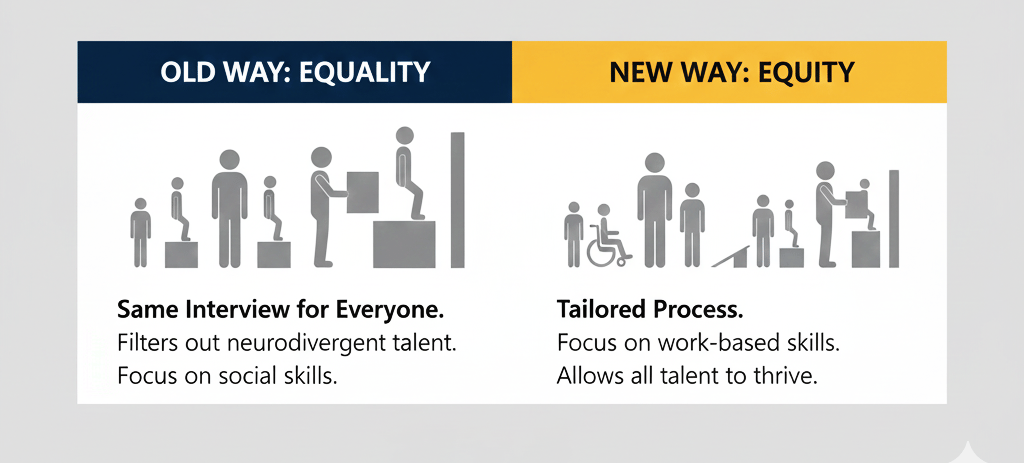
The Strategic Shift: Moving from Equality to Equity
Microsoft realized that "Equality" (giving every candidate the exact same 60-minute interview) was actually unfair to neurodivergent talent. They shifted toward Equity by redesigning the process:
The "Hiring Academy": Instead of a one-hour verbal interview, candidates participate in a multi-day hands-on workshop.
Skill over Speed: Candidates work on real-world coding projects in a collaborative, low-stress environment.
Direct Feedback: Rather than vague "culture fit" questions, recruiters provide clear, written expectations to reduce anxiety and ambiguity.
The Impact
The results of this shift proved that DEI is a massive driver of ROI. Microsoft reported:
Innovation Boost: Neurodivergent employees contributed to the development of major accessibility features now used by millions in products like Windows and Office.
High Retention: Employees hired through this program show significantly higher retention rates than the company average.
Problem-Solving: Diverse cognitive styles allowed teams to identify software bugs and architectural flaws that neurotypical teams had previously overlooked.
Key Lessons for Every Business
You don't need a Microsoft-sized budget to implement these "Key Lessons":
Skills-Based Testing: Replace "vibe-based" interviewing with tasks that actually mimic the job duties.
Clear Communication: Providing an interview agenda in advance is a low-cost "Equity" move that helps all candidates perform their best.
Broaden the Talent Pool: Looking beyond traditional social benchmarks can help you find "hidden gems" that your competitors are missing.
Microsoft’s success demonstrates that true innovation doesn’t come from everyone thinking the same way; it comes from creating an environment where different minds can solve problems together. By moving from a standard 'one-size-fits-all' hiring model to an equitable, skills-based approach, they didn't just fulfill a DEI goal, they unlocked a new tier of technical talent. For the modern business leader, the lesson is clear: when you remove unnecessary barriers to entry, you don't just help the candidate; you strengthen the entire organization's ability to innovate and compete.
Explore More Business Articles
Contact
Questions? Reach out anytime.
© 2025 BizSphere. All rights reserved.