

Exploring Diversity, Equity, and Inclusion in the Workplace
by Divya Kolmi
12/22/20253 min read
In the wake of global shifts, ranging from the transition to remote work to heightened social justice awareness, Diversity, Equity, and Inclusion (DEI) has moved from a "nice-to-have" HR initiative to a core business priority. Modern organizations are recognizing that fostering a truly inclusive environment is essential for employee well-being and long-term business performance.
Defining the Pillars of DEI
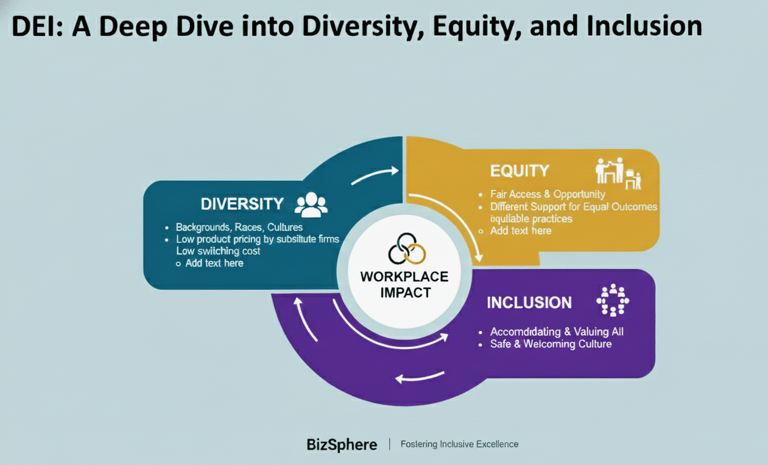
While often grouped together, DEI consists of three distinct yet interconnected goals:
Diversity: The quantitative presence of various backgrounds, races, cultures, and identities within a workforce. It answers the question: “Who is in the room?”
Equity: The structural commitment to fairness. Equity recognizes that different individuals start from different positions and may require tailored support or resources to achieve the same professional outcomes as their peers.
Inclusion: The qualitative experience of belonging. It involves actively accommodating historically marginalized groups: including those distinguished by race, sexuality, or physical ability, ensuring they are fully integrated into the organizational culture.
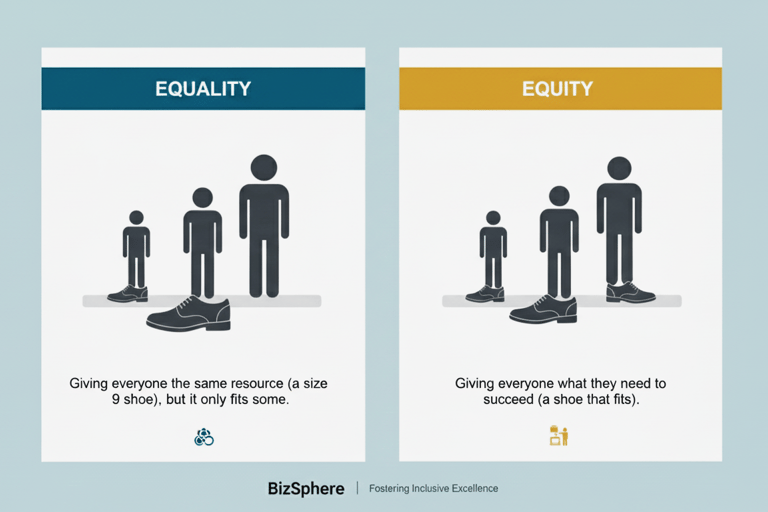
The Shoe Analogy: > Equality is giving everyone a size 9 shoe; it seems "fair," but it only works for some. Equity is measuring everyone's feet and providing the specific size they need to succeed.
The "Diversity Dividend": The Business Case for DEI
Beyond social impact, DEI is a powerful driver of financial performance. Organizations that prioritize diverse perspectives benefit from:
Enhanced Innovation: According to a BCG study, companies with diverse management teams have 19% higher revenues due to innovation.
Market Growth: McKinsey reports that companies in the top quartile for ethnic diversity are 36% more likely to outperform their peers financially.
Top Talent Attraction: Modern professionals particularly Gen Z, actively seek out employers with transparent and effective DEI commitments.
Data-Driven Implementation
For DEI to be effective, it must be measurable. Leading HR departments now leverage advanced analytics to identify hidden disparities. This involves:
Segmenting Demographics: Analyzing representation not just across the company, but within specific departments and leadership tiers.
Pay and Retention Audits: Using data to ensure equitable compensation and to track whether diverse talent stays with the company long-term.
Recruitment Funnel Analysis: Monitoring whether outreach efforts are successfully attracting a diverse pool of candidates, regardless of the final hiring decision.
Cultivating Retention Through Culture
Winning the "war for talent" is only half the battle; the true test is retention. Inclusion is the primary driver of employee loyalty. This requires a proactive approach to accommodations such as accessible workspaces for those with disabilities and a culture that encourages open dialogue. A workplace where employees feel they can be their authentic selves is a workplace where they are likely to stay.
DEI in a Globalized Market
For international firms, a "one-size-fits-all" DEI strategy is rarely successful. Organizations must account for regional and cultural nuances:
Cultural Calendars: Recognizing that events like Black History Month occur in different months globally (e.g., February in the US vs. October in the UK).
Religious Inclusivity: Respecting diverse spiritual practices, such as providing time for daily prayers or honoring different religious holidays.
Holiday Overlap: Managing the intersection of celebrations, such as balancing Pride Month initiatives with Juneteenth observances.
Addressing Microaggressions and Daily Interactions
Inclusive cultures are built through small, consistent actions rather than large, infrequent gestures. This includes training staff to be mindful of microaggressions, subtle, often unintentional slights that can alienate employees. Simple practices, like making an effort to pronounce names correctly or respecting cultural differences in communication styles, are the building blocks of a respectful environment.
A Commitment to Continuous Growth
DEI is not a project with a "finished" state; it is an ongoing organizational journey. It requires a willingness to engage in difficult conversations and a commitment to refining strategies as new challenges arise. By prioritizing transparency and continuous improvement, companies can build a resilient culture where every individual feels valued, respected, and empowered to succeed.
Ultimately, Diversity, Equity, and Inclusion are more than just corporate checkboxes; they are the architectural foundation of a resilient, innovative, and high-performing organization. As the global marketplace continues to shift, the companies that thrive will be those that move beyond symbolic gestures to implement data-driven, equitable systems. By fostering an environment where every voice is heard and every individual has the specific tools they need to succeed, businesses don’t just improve their culture, they secure their competitive advantage in an increasingly interconnected world.
Explore More Business Insights:
Contact
Questions? Reach out anytime.
© 2025 BizSphere. All rights reserved.