
Why strategic imbalance is the true secret to professional growth
by Divya Kolmi
1/2/20262 min read
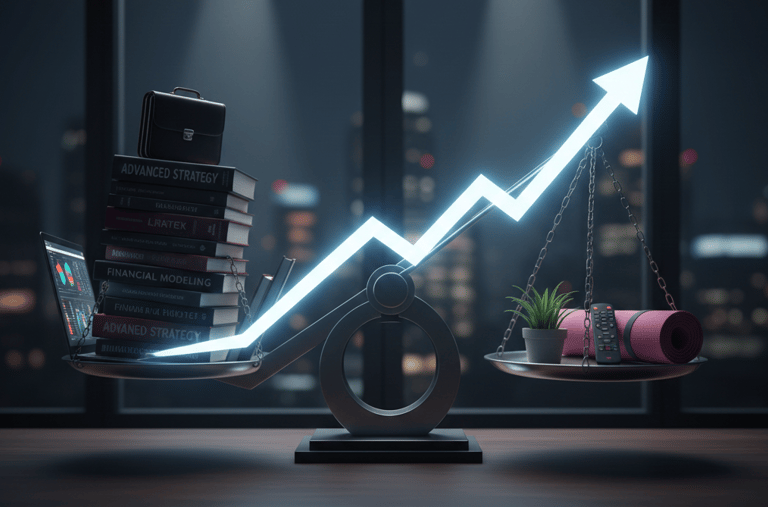
We have all seen the brochures meant to inspire us. They feature a smiling professional holding a briefcase in one hand and a yoga mat in the other, looking perfectly composed while presumably acing a complex technical exam. It’s a beautiful image, but after months of balancing a high-pressure career with an advanced degree, I have come to a realization that I think we need to say out loud: that image is a lie. The pursuit of "work-life balance" is perhaps the most self-destructive goal a person in our position can have. In my opinion, the strongest move you can make for your career and your mental health isn't to seek equilibrium, but to embrace what I call "Strategic Imbalance".
The fundamental logic is simple but harsh. High-stakes growth requires concentrated energy, and energy is a finite resource. If you try to keep every "burner" of your life - work, academics, family, and health - on high at the same time, the house will eventually catch fire. In the world of business, we understand that a company doesn't grow by being balanced in its spending; it grows by making massive, calculated bets and pouring capital into R&D or expansion while cutting costs elsewhere. As professionals striving for the next level, we are the company. We have to stop apologizing for the fact that, for this season of our lives, the "social" and "leisure" burners are turned down to a flicker so that our professional and intellectual development can boil.
This shift in mindset also changes how we evaluate our performance. We are naturally high-achievers who want an "A" in every category, but I have learned that chasing perfection in every single assignment can actually be a poor strategic decision. If you spend twenty extra hours to move a project from "excellent" to "perfect," the marginal utility of those hours is often incredibly low. A strategically imbalanced leader recognizes that those twenty hours are better spent networking with an industry mentor or simply sleeping so they don't walk into their day job the next morning as a ghost. It is about choosing to be "good enough" in the margins so you can be "exceptional" where it actually moves the needle for your long-term legacy.
The real power of admitting you are imbalanced is the immediate disappearance of guilt. Most of us live in a constant state of "split-focus" guilt: feeling bad at work because we aren't studying, and feeling bad at home because we aren't working. When you adopt a mindset of intentional imbalance, you grant yourself the permission to be fully present in the chaos. You stop trying to be a "well-rounded" person and start being a high-performance specialist. You acknowledge that this is a temporary, high-intensity season, and that the "tilt" is not a sign of failure, but a sign of a focused, disciplined strategy.
My challenge to my peers is to stop seeking the middle ground. The middle ground is where mediocrity lives. Leadership isn't about keeping the scales perfectly even; it's about having the guts to decide which side of the scale matters most today. When this journey ends, the person who tried to stay balanced will have a piece of paper, but the person who mastered strategic imbalance will have the transformed mindset and the raw grit required to lead through any crisis. Let’s stop trying to do it all and start doing what matters.
Contact
Questions? Reach out anytime.
© 2025 BizSphere. All rights reserved.