
Stop Pretending Cloud Seeding Is a Climate Solution
by Divya Kolmi
2/23/20262 min read
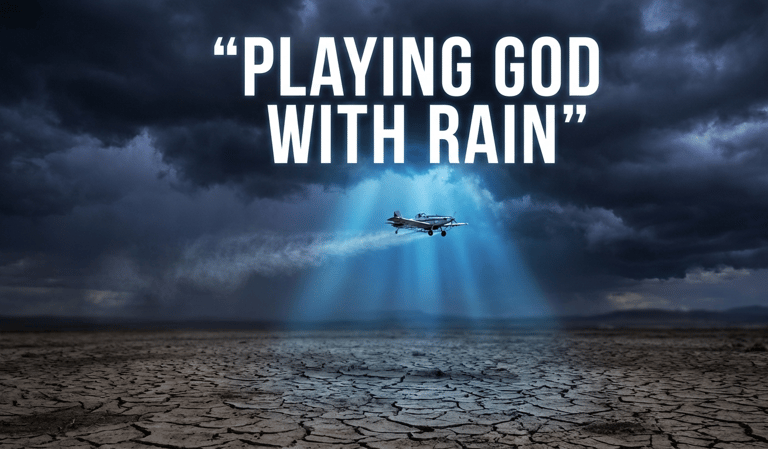
Cloud seeding is back in fashion. More than 50 countries are experimenting with weather modification. Governments are spraying silver iodide into clouds, trying to squeeze 5–15% more rain or snow out of the sky. China has invested billions. Drought-stricken regions from the Middle East to South Asia are ramping up programs. And we’re being told this is innovation.
It isn’t. It’s climate desperation dressed up as technological progress.
A 5% Fix for a 50% Problem
Let’s be honest about the math. A modest bump in precipitation does not solve structural water mismanagement, agricultural overuse, groundwater depletion, or urban sprawl built on outdated climate assumptions.
Cloud seeding doesn’t create clouds. It doesn’t reverse warming trends. It doesn’t fix leaky infrastructure or inefficient irrigation systems. It enhances what already exists. In a stable climate, that might be a useful optimization tool. In a destabilizing one, it’s a marginal patch. We are trying to fine-tune rainfall while ignoring the systems that created the crisis.
The Political Appeal Is the Real Story
So why the enthusiasm? Because cloud seeding is politically convenient.
It looks decisive.
It feels futuristic.
It avoids painful reforms.
Raising water prices? Politically toxic.
Restricting agricultural extraction? Risky.
Overhauling urban planning? Slow and unpopular.
But seeding clouds? That’s a headline-friendly action plan. It creates the appearance of control in a moment when governments feel increasingly powerless against climate volatility. The danger is not that cloud seeding exists. The danger is that it becomes a substitute for harder conversations.
Engineering the Sky Normalizes Intervention
There’s also a deeper shift happening. We are steadily normalizing planetary intervention.
We engineer crops.
We talk about geoengineering carbon.
Now we engineer precipitation.
Each step is justified as incremental. Temporary. Necessary. But collectively, we are redefining the atmosphere as infrastructure. That is a profound philosophical and geopolitical leap.
Once rainfall becomes a managed variable, questions follow:
Who decides when and where it rains?
What happens when neighbors accuse each other of “stealing” precipitation?
Who bears liability if interventions fail?
Weather stops being neutral. It becomes strategic.
The Moral Hazard No One Wants to Admit
Here’s the uncomfortable truth:
Cloud seeding risks creating moral hazard.
If policymakers believe they can offset drought with atmospheric tweaks, the urgency to reduce water consumption weakens.
It’s the same trap as financial hedging without reducing exposure. You feel protected - until systemic risk overwhelms your tools.
Climate volatility is accelerating. A 5–15% increase in precipitation is not a structural shield against multi-year drought cycles.
Overconfidence is more dangerous than inaction.
The Real Solution Isn’t Sexy
True water resilience is boring.
It’s upgrading pipes.
Reforming subsidies.
Pricing water rationally.
Investing in reuse and conservation.
Rebuilding ecosystems.
None of that makes dramatic headlines. But it works. Cloud seeding should be treated as what it is: a supplementary tactic with limited impact. Not a technological savior.
Making it rain is impressive. But pretending that engineered rainfall equals climate resilience is self-deception. If we start believing we can manage our way out of planetary limits through atmospheric manipulation, we risk doubling down on the very mindset that created the crisis.
The sky is not a policy lever. And the sooner we stop acting like it is, the better.
Contact
Questions? Reach out anytime.
© 2025 BizSphere. All rights reserved.