
Baby Formula, Criminal Probes, and Corporate Trust: This Is Bigger Than a Recall
by Divya Kolmi
2/20/20263 min read
When it comes to food scandals, most fade. This one won’t.
French prosecutors have opened criminal investigations into several baby formula manufacturers, including industry giants Nestlé and Danone, over possible contamination with cereulide, a toxin that can cause vomiting, diarrhea, and in severe cases, more serious complications. The recalls now span over 60 countries.
This is no longer a “precautionary recall.”
It’s a full-scale reputational stress test.
This Isn’t Just About Contamination - It’s About Systems
Cereulide isn’t a common contaminant. In fact, regulators only recently set a harmonized threshold because of its rarity. That’s exactly the problem.
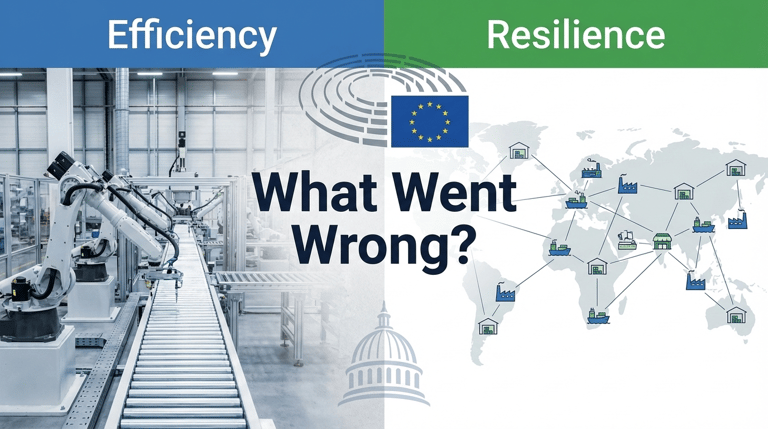
If a toxin is rare, oversight mechanisms may not be built to catch it quickly or consistently. And when supply chains are global, complex, and optimized for efficiency, a single ingredient supplier in this case ARA oil, can quietly connect multiple multinational brands.
That’s what happened here.
One supplier.
Multiple companies.
Dozens of countries.
Millions of parents watching the headlines.
The modern food system is incredibly efficient. But efficiency without redundancy creates fragility.
Criminal Investigation Changes the Game
The Paris prosecutor is investigating potential “deception regarding goods posing a danger to human health,” a charge that carries serious penalties. This shifts the story from operational mishap to potential legal liability. Even if no causal link is ultimately established between the formula and reported infant deaths, the fact that criminal investigations are underway elevates this from a recall to a credibility crisis. For brands that sell infant nutrition, credibility is the product.
The Financial Risk Is Subtle - But Real
On paper, the revenue exposure seems manageable:
Infant formula represents about 5% of revenue for Nestlé.
Recalled products reportedly account for roughly 0.5%.
For Danone, infant formula is far more significant — roughly 21% of group revenues.
But investors shouldn’t focus only on direct revenue impact. They should focus on brand trust.
Formula buyers are among the most risk-averse consumers in the world. Parents don’t “trade down” or experiment easily when infant safety is involved. If confidence erodes, the recovery timeline could stretch well beyond the recall period. Markets understand this. Both companies have lagged the broader Stoxx Europe 600 this year. That underperformance reflects something intangible: uncertainty.
The Real Issue: Supply Chain Transparency
One detail stands out: the supplier of the contaminated ARA oil has not been publicly named. That’s revealing. Modern multinationals rely on vast supplier networks, but public visibility into those networks remains limited. When something goes wrong, accountability becomes diffused.
In a world increasingly demanding ESG transparency, that model feels outdated. Consumers, especially parents - expect clarity, not opacity.
The Bigger Question for Investors
This isn’t about whether Nestlé or Danone can absorb recall costs. They can. It’s about whether global food giants are structurally equipped for:
Hyper-connected supply chain risk
Rapid regulatory escalation
Social media amplification
Zero-margin-for-error product categories
Infant formula is not cereal. It is not bottled water. It is not a snack brand that can rebrand and recover quietly. It sits at the intersection of health, trust, and emotion. And once trust is shaken, it’s expensive to rebuild.
Final Thought: Trust Is the Real Balance Sheet Item
Executives are apologizing. Investigations are ongoing. Thresholds are being set. Suppliers are being replaced. All necessary.
But the deeper story is this: global brands built on safety are being forced to prove that their internal controls are as strong as their marketing claims. This episode may not permanently damage these companies. But it will test whether their risk management systems are truly built for a world where one contaminated ingredient can travel across continents before anyone fully understands the consequences.
For investors, the earnings call numbers will matter. For parents, something else matters more.
Trust.
And that’s harder to quantify than any quarterly report.
Contact
Questions? Reach out anytime.
© 2025 BizSphere. All rights reserved.