
Risk Assurance in 2026: From Insurance Backstops to AI Governance - What Business Leaders Really Need to Know
by Divya Kolmi
1/23/20263 min read
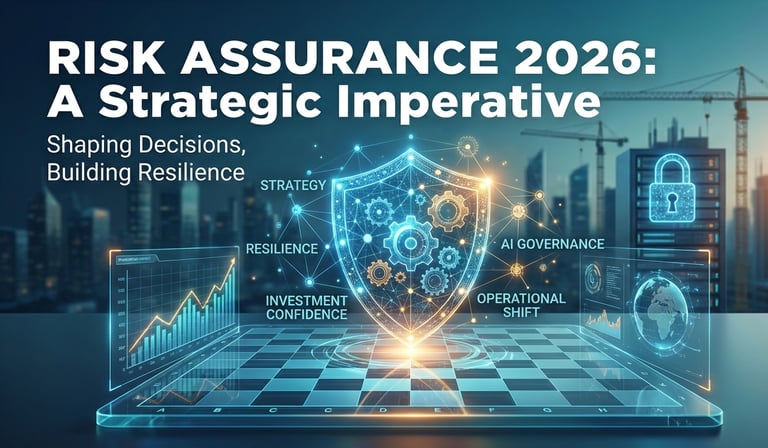
As we settle deeper into 2026, something striking is happening in the world of risk assurance: the conversation has shifted from isolated risks to strategic imperatives. What used to be a compliance or insurance function is now front and center in decisions that affect investment confidence, operational strategy, and long-term resilience.
This year’s headlines make the stakes clear. In the United States, insurers are publicly backing the early extension of the Terrorism Risk Insurance Program, recognizing that without a federal backstop, commercial activity ranging from construction to finance could be jeopardized by coverage gaps that make lenders and investors skittish. The fact that industry associations are openly engaging with lawmakers on this issue is no small thing; it underscores how risk assurance is now a market-shaping force, not just a policy checkbox.
At the same time, the risk assurance lens is reaching into domains it historically treated as downstream. In construction, for example, what used to be “builders’ risk” insurance as backstop coverage is now dictating how jobsites operate. Higher deductibles and stricter underwriting are forcing owners and contractors to embed risk mitigation, especially for weather and water exposure, into everyday planning, rather than relying on insurers to absorb losses. Companies that ignore this shift may find their operational strategy undermined by escalating indirect costs.
Hospitality, once thought of as a soft industry with seasonal volatility - now faces the same pressure: risks around labour, workplace safety, and compliance are materially affecting cost control and brand reputation in ways that directly impact profitability. This isn’t abstract ‘risk management speak’, these are real cost drivers that CEOs and CFOs must internalize when setting strategy and forecasting performance.
Professional services aren’t immune either. Forvis Mazars’ decision to build out a dedicated risk assurance practice in Scotland signals that the demand isn’t just in traditional insurance markets but also in public sector and regulated environments where risk assurance has become part of governance and transparency frameworks. This isn’t just about auditing or checking boxes, it’s about helping governments and organizations anticipate and mitigate complex risk exposures before they crystallize.
Perhaps the most significant shift, though, is taking place at the intersection of technology and risk assurance. At the World Economic Forum in Davos 2026, executives from EY and KPMG emphasized that the biggest issue around AI isn’t hype or productivity gains, it’s security and governance. When your risk assurance function is telling you that unmonitored AI agents, quantum vulnerabilities, and inadequate identity management are among your top threats, that’s a clear signal: risk assurance must be embedded into digital strategy, not siloed off as a support function.
The Real Lesson for Businesses
Here’s the part many leaders still miss: risk assurance is no longer reactive - it’s a core strategic differentiator. Companies that treat it as a regulatory burden are being outpaced by those that use it to inform decision-making. Robust assurance frameworks don’t just protect balance sheets, they unlock confidence with investors, reduce financing costs, and can even shape competitive positioning in crowded markets.
For example, when insurers raise the bar on risk disclosures, they’re effectively demanding better organizational intelligence from their clients. Firms that can articulate comprehensive, forward-looking risk profiles earn better coverage terms and stronger strategic partnerships. Those that can’t may pay higher costs or worse, face coverage gaps when they need protection most.
Similarly, organizations investing early in cybersecurity and technology risk assurance, particularly around AI and data governance - aren’t just complying with standards; they’re building trust architecture that shields them from systemic shocks and enhances customer confidence. The era of assuming that insurance or compliance alone will save you is over.
Final Take
Risk assurance in 2026 is less about preventing bad things after they happen and more about predicting, prioritizing, and preempting them. It elevates from a back-office function to a boardroom priority. Whether it’s terrorism coverage, construction risk shaping jobsite decisions, or AI security threatening enterprise systems, the message is clear: the companies that master risk assurance will not just survive, they will outperform peers who treat risk management as optional or perfunctory.
Contact
Questions? Reach out anytime.
© 2025 BizSphere. All rights reserved.