The Triple Bottom Line Framework: Why Modern Businesses Must Think Beyond Profit
by Divya Kolmi
1/14/20263 min read
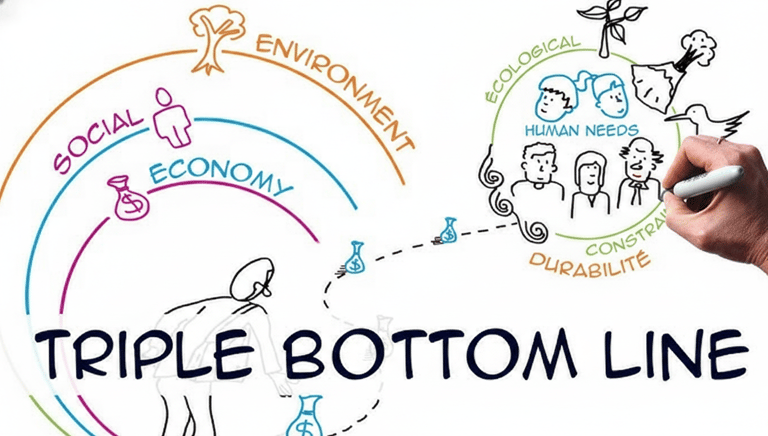
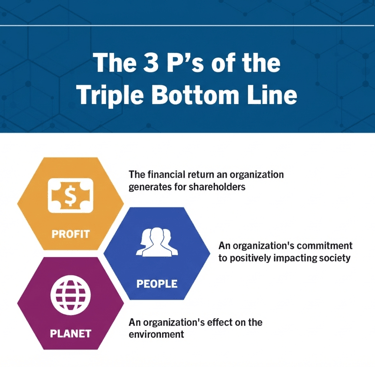
For decades, business success was measured by a single metric: profit. However, in today’s interconnected world, organizations are increasingly expected to deliver value not just to shareholders, but also to society and the environment. This shift has given rise to the Triple Bottom Line (TBL) framework, a sustainability model that evaluates business performance across three dimensions: People, Planet, and Profit.
The Triple Bottom Line challenges the traditional view of business by asking a simple but powerful question: Can a company be financially successful while also being socially responsible and environmentally sustainable?
What Is the Triple Bottom Line?
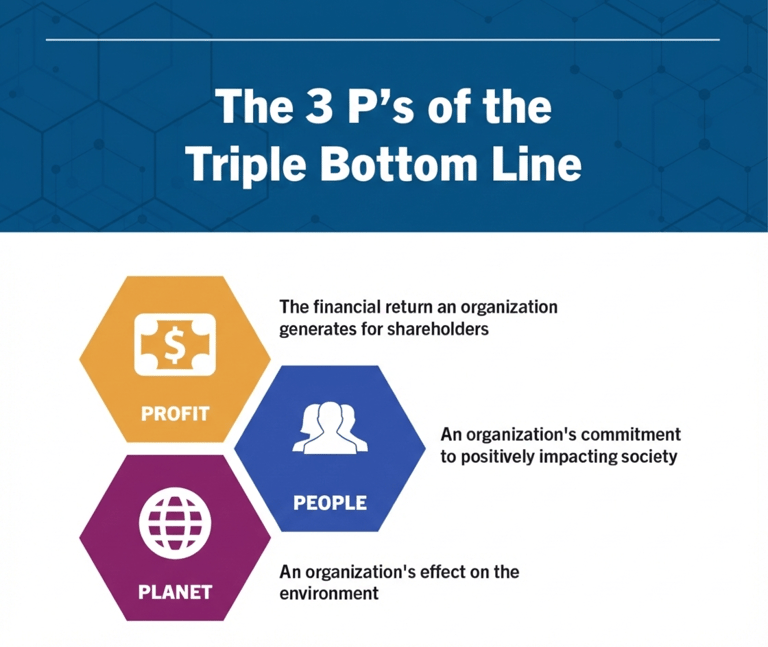
The Triple Bottom Line, introduced by John Elkington, expands the definition of organizational success by focusing on:
People (Social Impact)
Planet (Environmental Impact)
Profit (Economic Performance)
Rather than treating sustainability as a side initiative, TBL integrates these three pillars directly into business strategy and decision-making.
People
The People dimension focuses on how a company treats its employees, customers, suppliers, and the communities it operates in.
This includes:
Fair wages and safe working conditions
Diversity, equity, and inclusion (DEI) initiatives
Ethical sourcing and labor practices
Community engagement and social responsibility
Example: Starbucks
Starbucks invests heavily in employee benefits, ethical coffee sourcing, and community development programs. By prioritizing worker well-being and supplier fairness, the company builds trust, reduces turnover, and strengthens brand loyalty.
Key Insight:
Social responsibility is not just ethical, it directly impacts employee productivity, brand reputation, and long-term stability.
Planet
The Planet component evaluates how business operations affect the environment. Companies applying the TBL framework aim to minimize negative environmental impacts while promoting sustainable practices.
This includes:
Reducing carbon emissions
Using renewable energy
Minimizing waste and water consumption
Adopting circular economy practices
Example: IKEA
IKEA has committed to becoming a climate-positive business by investing in renewable energy, responsible sourcing, and product recycling programs. These initiatives not only reduce environmental harm but also improve operational efficiency over time.
Key Insight:
Environmental sustainability often leads to cost savings, risk reduction, and regulatory compliance.
Profit
While TBL broadens the scope of business success, profit remains essential. However, the focus shifts from short-term gains to long-term, sustainable profitability.
This includes:
Stable revenue growth
Ethical governance and transparency
Risk management and long-term investment planning
Example: Unilever
Unilever’s sustainable brands have consistently outperformed the rest of its portfolio. By aligning profitability with environmental and social goals, the company demonstrates that sustainability and financial performance can reinforce each other.
Key Insight:
Profit achieved responsibly is more resilient and attractive to investors.
Why the Triple Bottom Line Matters Today?
The relevance of the Triple Bottom Line has grown due to:
Increased investor focus on ESG metrics
Rising consumer demand for ethical brands
Regulatory pressure on environmental and social compliance
Global challenges such as climate change and inequality
Organizations that ignore these factors risk reputational damage, operational disruption, and long-term decline.
Applying the Triple Bottom Line in Business Strategy
Businesses can operationalize the TBL framework by:
Integrating ESG goals into strategic planning
Measuring social and environmental performance alongside financial metrics
Aligning leadership incentives with sustainability outcomes
Embedding ethical decision-making across the value chain
The Triple Bottom Line is not about perfection, it is about progress and accountability.
The Triple Bottom Line framework reframes business success by recognizing that profit, people, and the planet are interconnected. Companies that balance these three pillars are better positioned to navigate uncertainty, build trust, and achieve sustainable growth.
In a world where stakeholders demand more from businesses, the Triple Bottom Line is no longer optional, it is a strategic necessity.
Explore More Business Articles
Contact
Questions? Reach out anytime.
© 2025 BizSphere. All rights reserved.