
The Hard Truth About Ethical Decision Making
by Divya
3/2/20262 min read
Most people think ethics is about knowing the right answer. It is not. It is about recognizing when there is no clean answer and still choosing to act with intention.
What stood out to me from this session is how often we reduce ethics to rules or feelings. We say something feels wrong or we check if it is legal and move on. That is convenient, but it is also shallow. Ethical decision making becomes real only when the situation is uncomfortable, when values clash, and when every option carries a cost.
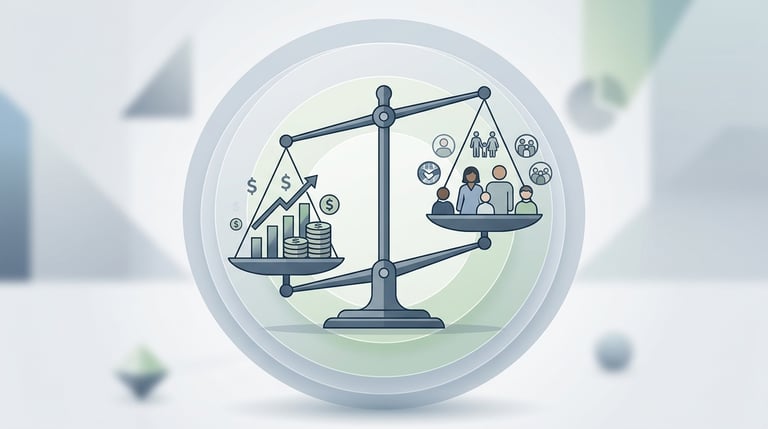
Take a simple workplace example. A manager has to decide whether to lay off a small team to keep the company financially stable. A utilitarian view might justify layoffs because it protects the larger group. A justice lens might question whether the burden is being placed fairly. A care ethics approach would push the manager to consider the human impact on those individuals beyond numbers. None of these are wrong, but each leads to a different decision. That is the point. Ethics is not about one perfect lens, it is about the discipline of looking through multiple lenses before acting.
What I find most practical is the structured approach to decision making. Awareness, understanding, identifying stakeholders, gathering facts, consulting others, and then reflecting after acting. This sounds obvious, but in reality most decisions skip half of these steps. We jump from recognizing a problem to acting on instinct. That is where ethical blind spots show up, especially when invisible stakeholders are ignored.
Another important insight is that ethics is deeply personal, but it should not be isolated. Your values come from your experiences, culture, and influences, but good decisions require exposing those values to different perspectives. If everyone you consult thinks like you, you are not testing your ethics, you are reinforcing them.
In my view, the biggest mistake people make is treating ethics as a one time decision instead of a continuous process. The reflection step is where real growth happens. If a decision leads to unintended harm and you do not revisit it, you have not practiced ethics, you have just made a choice.
If I had to reduce my own ethical approach into one idea, it would be this. Slow down enough to understand who is affected, especially the people who are not in the room, and be willing to question your first instinct.
Ethics is not about being right. It is about being responsible for the impact of your decisions.
Explore More Business Articles
Contact
Questions? Reach out anytime.
© 2025 BizSphere. All rights reserved.